The Peptide Cold Chain: Temperature Stability From Synthesis to Bench
Key takeaways
- What the cold chain means for peptides
- Stages of the cold chain
- What to check on arrival
- Storage after arrival
What the cold chain means for peptides
A cold chain is an unbroken sequence of temperature-controlled storage and transport. For many research peptides, maintaining a low temperature from the point of manufacture to the moment of reconstitution is the single most important factor in preserving chemical integrity.
Peptides are not indefinitely stable at room temperature. Heat accelerates the same degradation reactions that lyophilisation was designed to prevent: hydrolysis, oxidation, deamidation, and aggregation. The colder the storage, the slower these reactions proceed. A peptide that lasts weeks at room temperature can last months in a refrigerator and years in a freezer.
Stages of the cold chain
Synthesis and purification. After solid-phase synthesis and HPLC purification, the peptide is typically frozen as a solution before lyophilisation. The temperature at this stage affects how cleanly the material dries.
Lyophilisation and packaging. Once dried, the peptide is sealed in a vial under inert gas or vacuum. At this point the product is at its most stable, but it still benefits from cool storage.
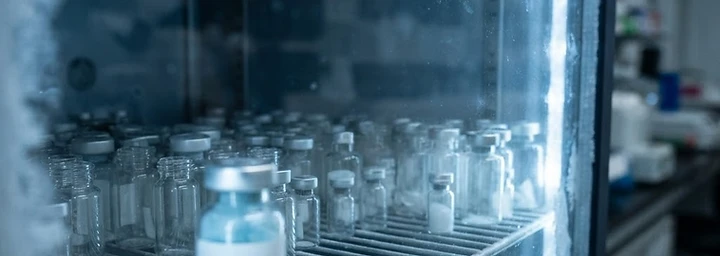
Storage at the supplier. Reputable suppliers store lyophilised peptides refrigerated or frozen until the order is picked, minimising the time the material spends at ambient temperature.
Shipping. This is the most vulnerable link. A peptide crossing a country or a continent in the back of an unrefrigerated van in summer can experience temperature spikes that no certificate of analysis will later reveal. Insulated packaging, cold packs, and expedited shipping are the controls that prevent this.
Arrival and storage at the laboratory. Once received, the vial should be inspected, logged, and transferred to refrigerated or frozen storage until the day of reconstitution.
What to check on arrival
- Packaging integrity. Is the vial sealed and undamaged? A compromised seal admits moisture that begins degrading the peptide immediately.
- Cold-pack condition. If cold packs were used, are they still partially frozen or at least cool? Fully warm packs in an insulated box suggest a prolonged ambient exposure.
- Powder appearance. Lyophilised peptide should be a dry, free-flowing powder or cake. Clumping, discolouration, or a damp look can indicate moisture ingress.
- Documentation. The certificate of analysis should match the batch and product. Cross-check the lot number on the vial against the COA.
Storage after arrival
For long-term storage, lyophilised peptides are best kept at −20 °C or below. For short-term use within weeks, refrigeration at 2–8 °C is generally acceptable. Once reconstituted, the stability window shortens dramatically — most reconstituted peptides should be kept refrigerated and used within days to weeks, depending on the compound.
A break in the cold chain is invisible: the peptide looks the same before and after. That is why sourcing from a supplier with controlled storage and validated shipping is the researcher's best protection against receiving material that has already begun to degrade.
UK Locations Mentioned in This Article
From the locations referenced above to laboratories nationwide — HPLC Peps delivers research peptides across Britain.

Research-grade peptides for your laboratory
Browse the shop