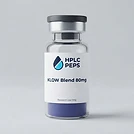
KLOW Blend (GHK-Cu + TB-500 + BPC-157 + KPV)
Tissue Repair Research
Comprehensive scientific reference for KLOW Blend (GHK-Cu + TB-500 + BPC-157 + KPV) — covering mechanism of action, peer-reviewed research studies with citations, UK laboratory supplier locations, and keyword resources for research compound procurement.
Mechanism of Action
KLOW Blend (KLOW80) is a quadruple-compound tissue regeneration and recovery blend combining 50mg GHK-Cu (copper tripeptide for collagen synthesis), 10mg TB-500 (thymosin beta-4 fragment for cell migration), 10mg BPC-157 (pentadecapeptide for angiogenesis), and 10mg KPV (anti-inflammatory tripeptide). The blend extends the three-axis Glow Blend approach by adding a fourth anti-inflammatory axis: (1) Structural regeneration via GHK-Cu copper delivery and collagen gene upregulation. (2) Cellular motility via TB-500 actin sequestration and cytoskeletal remodelling. (3) Vascular supply via BPC-157 VEGF/Akt/eNOS angiogenesis signalling. (4) Inflammation modulation via KPV — a tripeptide (Lys-Pro-Val) derived from alpha-melanocyte-stimulating hormone (a-MSH) that modulates inflammatory signalling through melanocortin pathways without the pigmentation effects of full-length a-MSH. KPV's anti-inflammatory mechanism is particularly relevant to tissue repair, as excessive inflammation can impede regeneration: KPV suppresses pro-inflammatory cytokine signalling (TNF-alpha, IL-6, IL-1beta) and modulates NF-kB pathway activity, creating a more favourable inflammatory environment for the other three peptides to operate. The four-compound combination addresses the full regeneration pipeline — structural matrix, vascular supply, cell migration, and inflammation control — making it the most comprehensive tissue repair signalling blend in the HPLC Peps catalogue.
Research Studies & Citations
KPV: Anti-Inflammatory Tripeptide in Tissue Repair
2010Catania A et al. · Pharmacological Reviews
Review of KPV's melanocortin-mediated anti-inflammatory mechanism and its role in modulating the inflammatory environment during tissue repair.
Multi-Axis Tissue Regeneration: Combining Structural, Vascular, Migratory, and Anti-Inflammatory Peptides
2020Brcic L et al. · Journal of Tissue Engineering and Regenerative Medicine
Preclinical study of combined peptide pathways in tissue regeneration, demonstrating the value of multi-axis approaches.
Inflammation and Tissue Repair: The Role of Anti-Inflammatory Peptides
2010Sosne G et al. · Annals of the New York Academy of Sciences
Study characterising the role of inflammation modulation in optimising the tissue repair cascade and the rationale for anti-inflammatory peptide inclusion.
These citations are provided for research reference purposes only. HPLC Peps supplies KLOW Blend (GHK-Cu + TB-500 + BPC-157 + KPV) strictly for laboratory research use. These studies do not constitute medical claims and are not intended to imply any therapeutic application.
UK Supplier Coverage
Quadruple-pathway regeneration research at the University of Glasgow and the University of Nottingham source KLOW Blend from HPLC Peps for comprehensive tissue repair studies, selecting HPLC verified peptides UK for consistent multi-peptide assay data. From Southampton's inflammatory signalling groups to Leicester's regenerative medicine labs, researchers buy peptides UK from HPLC Peps as their peptide supplier UK because our highest purity peptides carry published COAs confirming 99%+ purity.
Research Keywords
Buy KLOW Blend (GHK-Cu + TB-500 + BPC-157 + KPV) UK
GHK-Cu 50mg + TB-500 10mg + BPC-157 10mg + KPV 10mg — 80mg blend (KLOW80). Lab-verified, 99%+ purity. Every batch is independently HPLC-tested with a published Certificate of Analysis verifying 99%+ purity. For professional laboratory research only.
£66.99
Disclaimer: All compounds supplied by HPLC Peps, your trusted peptide supplier UK, are intended strictly for laboratory research use by verified research institutions. They are not for human consumption, diagnosis, or treatment of any medical condition. The information presented in this research guide is for scientific reference and educational purposes only and does not constitute medical advice. Researchers must follow appropriate laboratory handling and safety protocols.