Retatrutide
Metabolic Research
Comprehensive scientific reference for Retatrutide — covering mechanism of action, peer-reviewed research studies with citations, UK laboratory supplier locations, and keyword resources for research compound procurement.
Mechanism of Action
As the highest purity peptides option for triple-agonist metabolic research, retatrutide is a first-in-class triple-hormone receptor agonist targeting GLP-1, GIP, and glucagon receptors — the broadest metabolic research footprint of any current incretin-class compound. The peptide is engineered as a balanced triple agonist based on a glucagon-like peptide scaffold, with structural modifications that confer affinity for all three class B GPCRs while maintaining a prolonged pharmacokinetic profile through fatty acid chain-mediated albumin binding. At the GLP-1 receptor, retatrutide activates the canonical Galphas/cAMP/PKA insulinotropic cascade in pancreatic beta-cells with glucose dependency. At the GIP receptor, it provides complementary incretin signalling that amplifies insulin secretion and modulates adipose tissue metabolism. Critically, at the glucagon receptor (GCGR) — expressed primarily on hepatocytes — retatrutide activates signalling that stimulates hepatic glucose output and, more significantly for metabolic research, promotes lipolysis and fatty acid oxidation in adipose tissue and liver. The glucagon receptor arm distinguishes retatrutide from dual agonists: glucagon receptor activation is associated with increased energy expenditure, hepatic lipid metabolism, and weight reduction through pathways distinct from appetite suppression alone. The integrated triple-receptor signalling produces combined insulinotropic, appetite-suppressing, and lipolytic effects — the broadest metabolic pathway coverage in the incretin agonist class.
Research Studies & Citations
Retatrutide Phase 2 Trial in Obesity
2023Jastreboff AM et al. · New England Journal of Medicine
Phase 2 trial demonstrating unprecedented weight reduction with retatrutide, establishing the clinical potential of triple GLP-1/GIP/glucagon receptor agonism in metabolic health research.
Triple Hormone Receptor Agonism: Preclinical Pharmacology
2021Henderson SJ et al. · Cell Metabolism
Preclinical characterisation of retatrutide's balanced triple-receptor binding and signalling, demonstrating synergistic metabolic effects versus dual and single agonists in rodent models.
Glucagon Receptor Signalling and Hepatic Lipid Metabolism
2020Stern JH et al. · Diabetes
Mechanistic study of the glucagon receptor arm of retatrutide, characterising its role in hepatic lipolysis and energy expenditure signalling distinct from incretin effects.
Retatrutide Dose-Response in Obesity
2024Aronne LJ et al. · JAMA
Dose-ranging Phase 2 trial confirming dose-dependent weight loss and metabolic improvement, supporting the triple-agonist mechanism as a next-generation metabolic research target.
These citations are provided for research reference purposes only. HPLC Peps supplies Retatrutide strictly for laboratory research use. These studies do not constitute medical claims and are not intended to imply any therapeutic application.
UK Supplier Coverage
Triple-agonist research at King's College London and the University of Leeds depends on retatrutide supplied by HPLC Peps, the peptide supplier UK that laboratories trust for the highest purity peptides. From Belfast's metabolic signalling groups to Bristol's pharmaceutical research units, scientists buy peptides UK from HPLC Peps because our HPLC verified peptides UK carry published COAs confirming 99%+ purity — the standard that makes us the best reviewed peptides UK source for cutting-edge incretin research.
Research Keywords
Buy Retatrutide UK
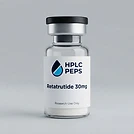
Triple agonist (GLP-1/GIP/Glucagon) — 30mg research compound. Lab-verified, 99%+ purity. Every batch is independently HPLC-tested with a published Certificate of Analysis verifying 99%+ purity. For professional laboratory research only.
£87.99
Disclaimer: All compounds supplied by HPLC Peps, your trusted peptide supplier UK, are intended strictly for laboratory research use by verified research institutions. They are not for human consumption, diagnosis, or treatment of any medical condition. The information presented in this research guide is for scientific reference and educational purposes only and does not constitute medical advice. Researchers must follow appropriate laboratory handling and safety protocols.