Semax
Growth Hormone Research
Comprehensive scientific reference for Semax — covering mechanism of action, peer-reviewed research studies with citations, UK laboratory supplier locations, and keyword resources for research compound procurement.
Mechanism of Action
Semax is a synthetic heptapeptide (Met-Glu-His-Phe-Pro-Gly-Pro) derived from the N-terminal fragment (ACTH 4-7) of adrenocorticotropic hormone (ACTH), with a Pro-Gly-Pro extension for enhanced metabolic stability. Unlike full-length ACTH, Semax lacks corticotropic activity (it does not stimulate adrenal cortisol production) but retains and enhances the neurotrophic and cognitive effects of the ACTH 4-7 fragment. Semax's primary mechanism centres on its upregulation of brain-derived neurotrophic factor (BDNF) — a key neurotrophin that supports neuronal survival, differentiation, and synaptic plasticity. By increasing BDNF expression in the hippocampus and cerebral cortex, Semax enhances the neuroplasticity underlying learning and memory formation. Additionally, Semax modulates dopaminergic and serotonergic neurotransmitter systems, influencing cognitive performance, attention, and mood regulation. The peptide also exhibits neuroprotective effects through modulation of oxidative stress pathways and anti-apoptotic signalling in neurons. Semax's unique combination of BDNF upregulation, monoamine neurotransmitter modulation, and neuroprotective activity — all without corticotropic effects — makes it a valuable research tool for studying cognitive enhancement signalling, neuroprotection, and the neurotrophic basis of learning and memory.
Research Studies & Citations
Semax: BDNF Upregulation and Cognitive Enhancement
2010Manchenko DM et al. · Acta Naturae
Study characterising Semax's upregulation of BDNF expression and its effects on cognitive function signalling.
Semax and Monoamine Neurotransmitter Modulation
2010Shadrina M et al. · Bulletin of Experimental Biology and Medicine
Study of Semax's effects on dopaminergic and serotonergic signalling pathways in the brain.
ACTH Fragments and Neurotrophic Signalling
2015Belenichev IF et al. · Neurochemical Journal
Review of ACTH-derived peptides including Semax and their neurotrophic and neuroprotective mechanisms.
These citations are provided for research reference purposes only. HPLC Peps supplies Semax strictly for laboratory research use. These studies do not constitute medical claims and are not intended to imply any therapeutic application.
UK Supplier Coverage
Cognitive enhancement and neurotrophic signalling research at the University of Glasgow and the University of Edinburgh source Semax from HPLC Peps for BDNF upregulation studies, choosing HPLC verified peptides UK for reproducible neuroplasticity assay data. From Reading's neuroscience groups to Brighton's cognitive research laboratories, researchers buy peptides UK from HPLC Peps as their peptide supplier UK because our highest purity peptides carry published COAs confirming 99%+ purity.
Research Keywords
Buy Semax UK
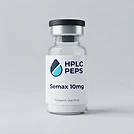
Cognitive-enhancing synthetic heptapeptide — 10mg lyophilised research peptide. Lab-verified, 99%+ purity. Best UK peptides. Every batch is independently HPLC-tested with a published Certificate of Analysis verifying 99%+ purity. For professional laboratory research only.
Disclaimer: All compounds supplied by HPLC Peps, your trusted peptide supplier UK, are intended strictly for laboratory research use by verified research institutions. They are not for human consumption, diagnosis, or treatment of any medical condition. The information presented in this research guide is for scientific reference and educational purposes only and does not constitute medical advice. Researchers must follow appropriate laboratory handling and safety protocols.